LOUISIANA STORIES
Chronicling untold and overlooked truths about Louisiana

RITA AND HER RUINS
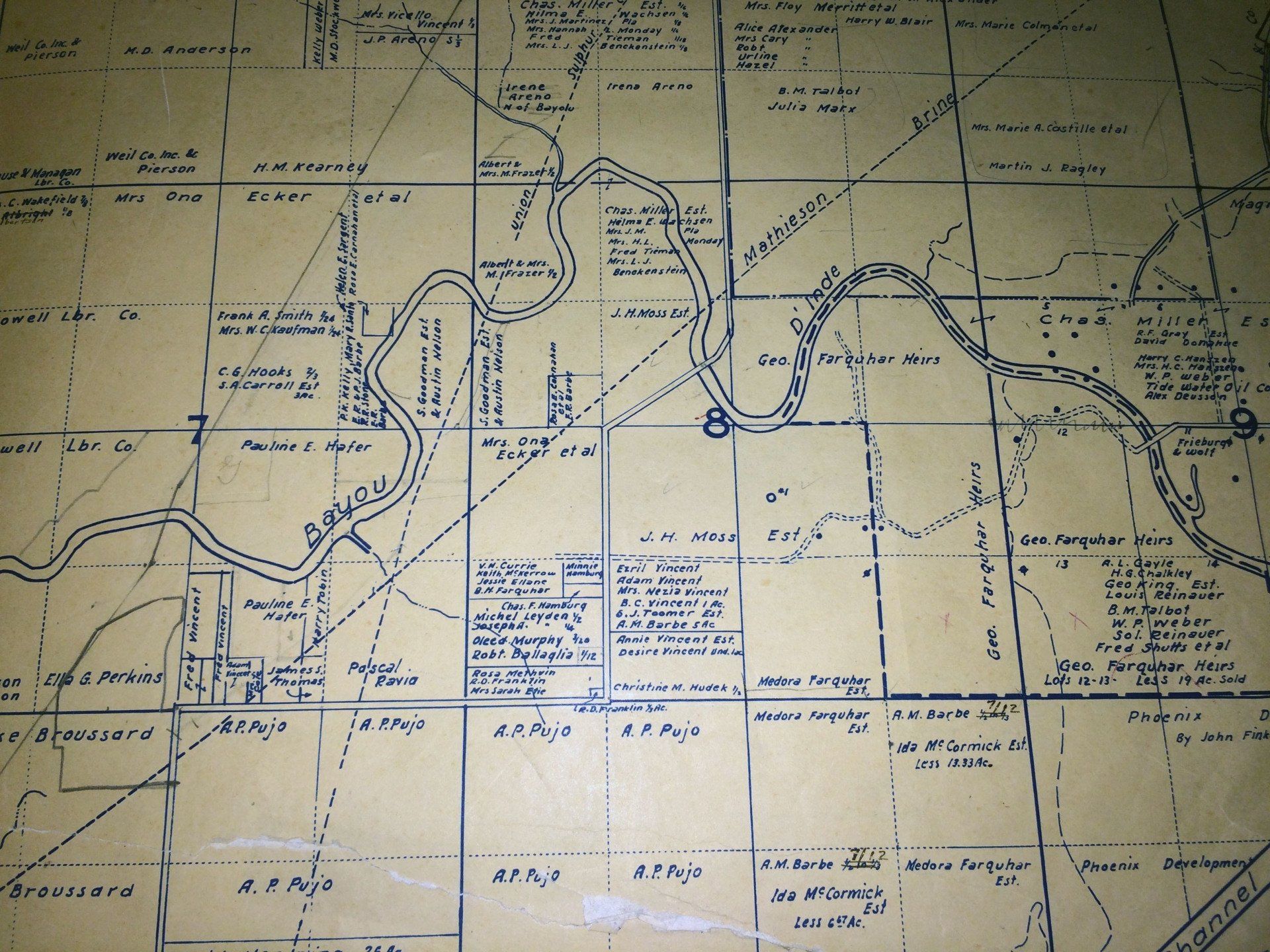
"My soul is stuck in that September. Maybe sequestered deep in the Black Bayou marsh. Or lodged in the rafters of the old green barn. Or tied up with roseau cane. Somewhere in Sweetlake, to be sure. Caught there twenty years ago, when I was just fourteen."
This story for 64 Parishes offers a 20-year retrospective of Hurricane Rita, which made landfall between Sabine Pass and Johnson Bayou in the early morning of September 24, 2005. To date, Hurricane Rita is the strongest storm ever recorded in the Gulf of Mexico.
SHOULD SUGARCANE SING
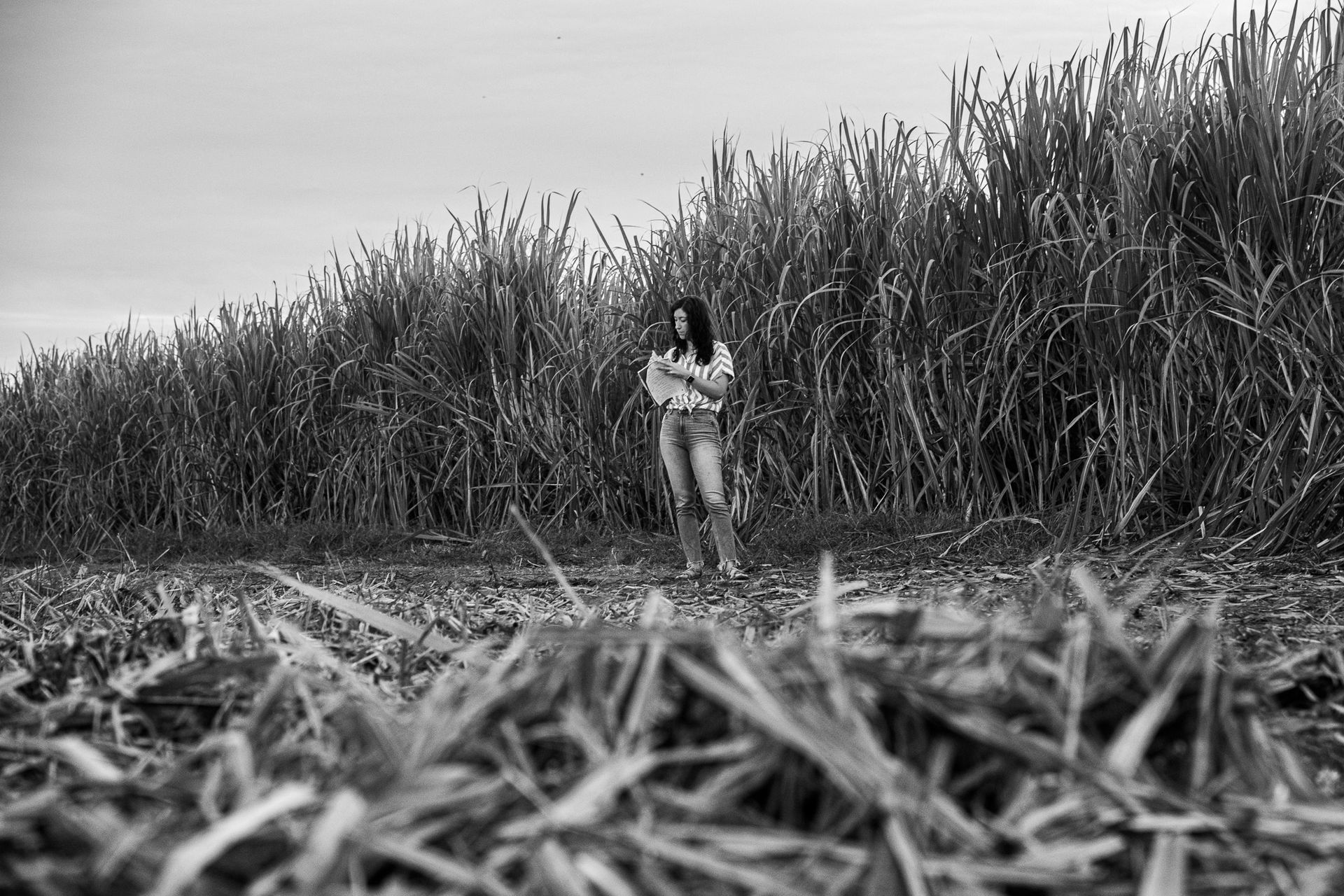
"Should sugarcane sing, should symphony ever spill from these stalks, this song would call our name. This song would remind us of all the ancestors who labored in these fields. This song would show just how many hands it takes to feed us."
This cover story for 64 Parishes features interviews with farmers in St. Martinville and New Iberia to answer the question of whether sugarcane farming will soon be taken over by AI and automation.
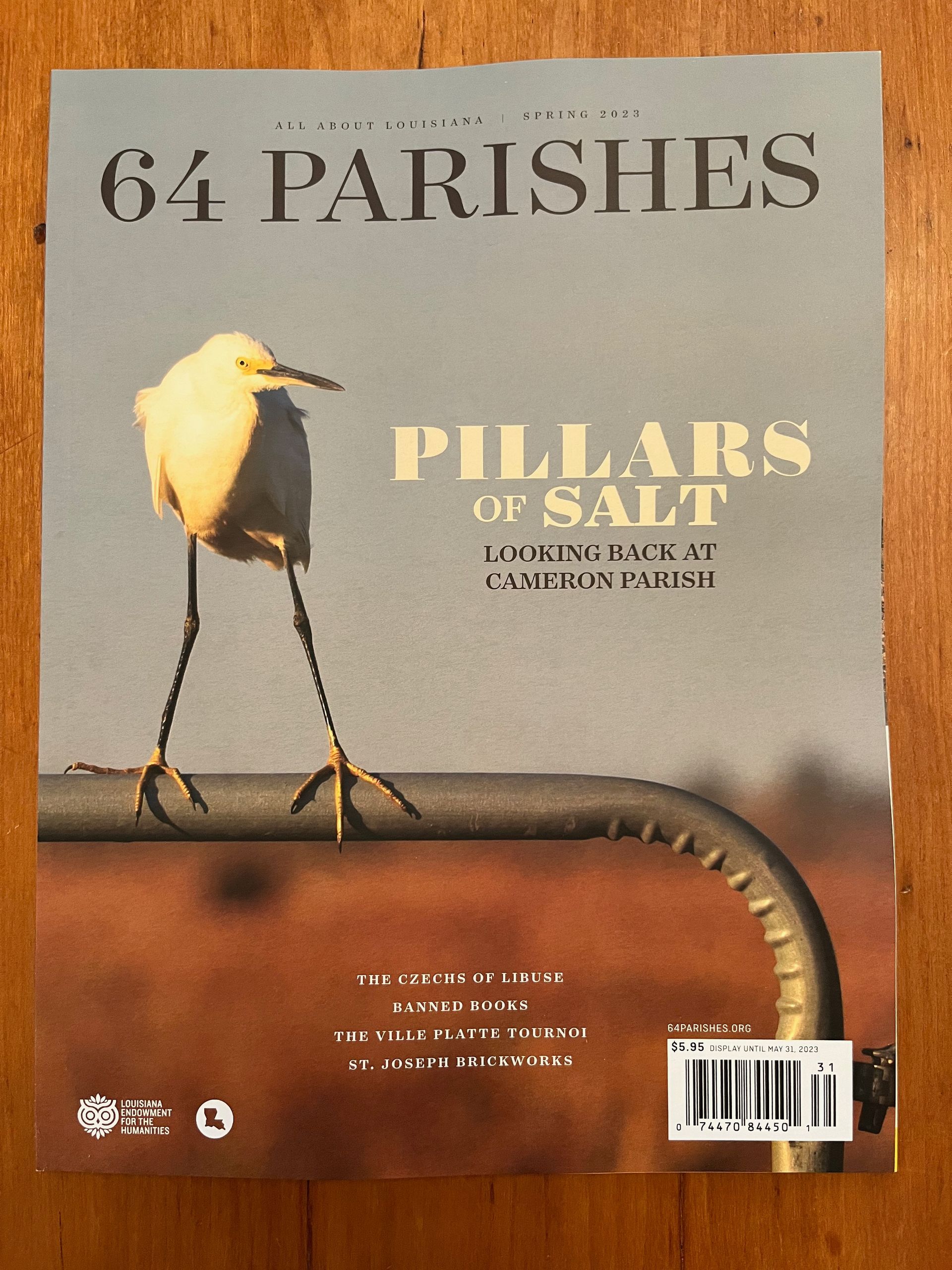
PILLARS OF SALT IN THE MARSH
"Some days I think we'll turn out like the skimmers and plovers: we'll keep thriving off disaster, man-made or otherwise. We'll keep raising our young to be gritty and resilient. Other days, though, when I'm standing in the middle of Highway 27, tasting the air for sea salt, which shouldn't be this far inland, I worry that we'll become a modern-day apocalyptic warning, one they'll pass down through the ages."
This cover story for 64 Parishes reflects on the changing terrain of Cameron Parish, Louisiana, examining how the oil and gas industry and climate change threaten the area's biological diversity.
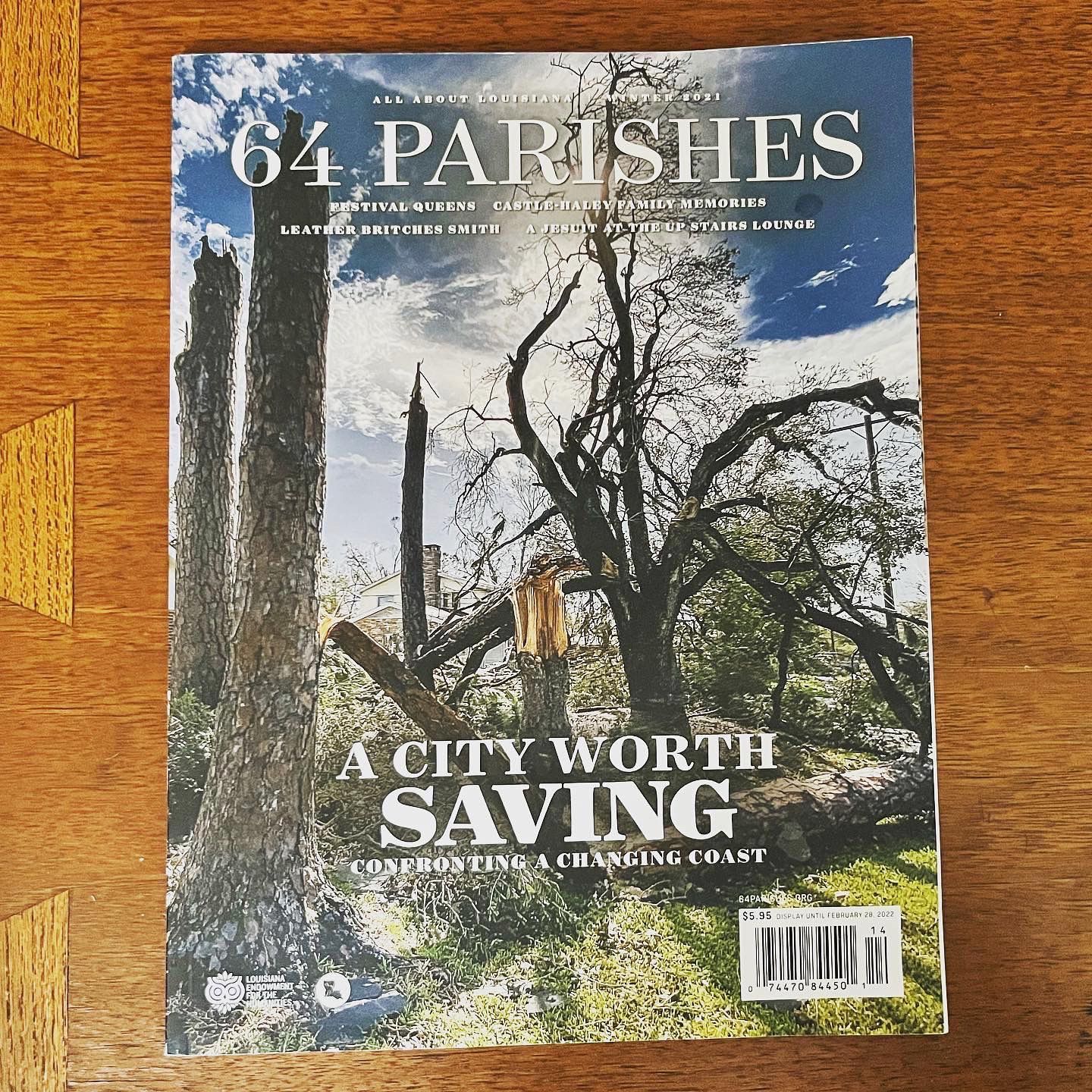
A CITY WORTH SAVING
In April 2021, the New York Times
reported that Lake Charles experienced more net-out migration than any other city in the nation in the year 2020. That article blamed lowering oil prices and the global Covid-19 pandemic. This cover story for 64 Parishes features voices across Southwest Louisiana to set the record straight: migration there has everything to do with hurricanes, climate change, and the changing nature of the Gulf Coast.
WHAT'S AT STAKE? A CONVERSATION ON CULTURE AND THE CHANGING COAST
How are extreme weather and coastal land loss are affecting culture, community, and tradition across South Louisiana? I moderated this program, sponsored by the Louisiana Endowment for the Humanities and introduced by former Louisiana State Senator and Mayor of Lake Charles Willie Mount, to answer that question. Panelists included Joy Banner, community activist and director of communications at Whitney Plantation in Edgard; Jonathan Foret, executive director of South Louisiana Wetlands Discovery Center in Houma; Eli Langley, a cultural preservationist and member of the Coushatta Tribe of Louisiana; and Keagan Lejeune, folklorist and professor of English at McNeese State University.
THE LIMITS OF GRIT
Hurricanes are an inevitable reality of living on the Gulf Coast, but few hurricane seasons have shaped SWLA like 2020. Hurricane Laura, a powerful category 4 storm, desolated the area in late August, leveling homes and ridding residents of water and power for weeks. Several weeks later, Hurricane Delta erased recovery efforts. This reflective narrative grapples with why the stories of that season and its impacts on local residents are all but ignored by national news.
THE FORGOTTEN AMONG US
An all too convenient narrative circulates across Southwest Louisiana: we cannot reckon with the history of slavery in the area because a 1910 courthouse fire destroyed all such records. Or, to put it another way, an all too convenient silence subsists because of the absence of narratives surrounding the life and work of individuals who were enslaved in Southwest Louisiana.
This project attempts to recover their stories through conveyance books located at local land and title companies. These books list an overview of the sale records that were filed in the courthouse prior to the fire. Preserving and digitizing these records will open up stories of the past and provide timelines, maps, and genealogies for descendent communities.
Related Projects
AIR JUSTICE